publications
publications by categories in reversed chronological order.
2026
-
 The General Antiparticle Spectrometer (GAPS) Antarctic Balloon PayloadThe GAPS Collaboration, Kazutaka Aoyama, Tsuguo Aramaki, and 65 more authorsApr 2026
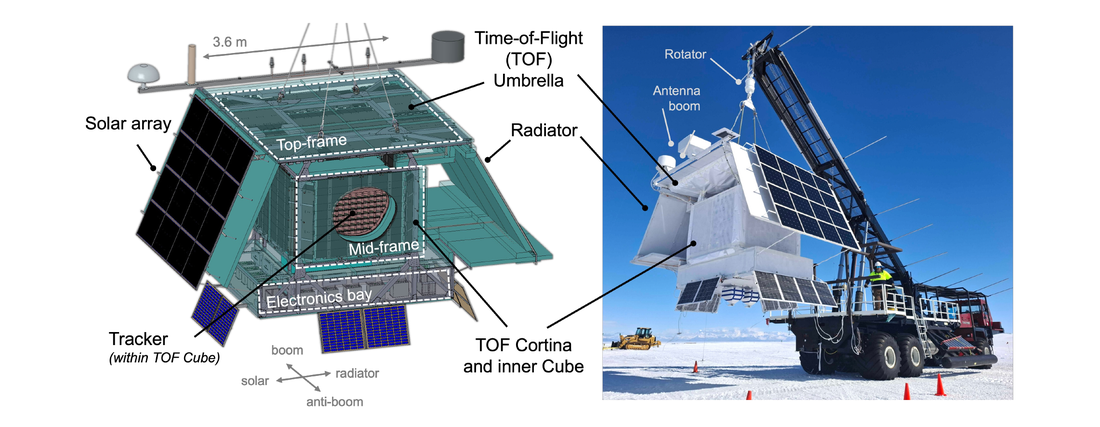
The General Antiparticle Spectrometer (GAPS) is an Antarctic stratospheric balloon mission designed to provide unmatched sensitivity to low-energy (<0.25 GeV/n) cosmic-ray antiprotons, antideuterons, and antihelium nuclei as signatures of dark matter. The distinctive GAPS particle identification technique relies on measuring the energy loss along the track of an incoming antinucleus as it slows down and is captured into an exotic atom, and then detecting the de-excitation X-rays and the nuclear annihilation products. This measurement is realized using a Tracker composed of more than 1000 custom silicon strip detectors and a plastic scintillator time-of-flight (TOF) system instrumenting more than 40m\^2\. Together, these subsystems provide the velocity and energy resolution, stopping power, particle tracking, and X-ray identification necessary to distinguish rare antinucleus signals from the abundant positive-nucleus backgrounds, all within the constraints of a high-altitude mission. A multi-loop capillary heat pipe system has been developed to maintain the tracker operating temperature with significant mass and power savings over a conventional pump-based system. The first GAPS science payload flew for 25 days during the 2025/26 NASA Antarctic balloon campaign. We detail the design, integration, and commissioning of the payload prior to flight.
-
 Dynamic Signal Compression for Balloon-Borne SpectrometryLuca Ghislotti, Paolo Lazzaroni, Massimo Manghisoni, and 3 more authorsIn Proceedings of SIE 2025: 56th Annual Meeting of the Italian Electronics Society, 2026
 -
 A 65 Nm CMOS Readout ASIC with Dynamic Signal Compression for Balloon-Borne Spectrometry ApplicationsLuca Ghislotti, Paolo Lazzaroni, Massimo Manghisoni, and 3 more authorsIn Proceedings of SIE 2025, 2026
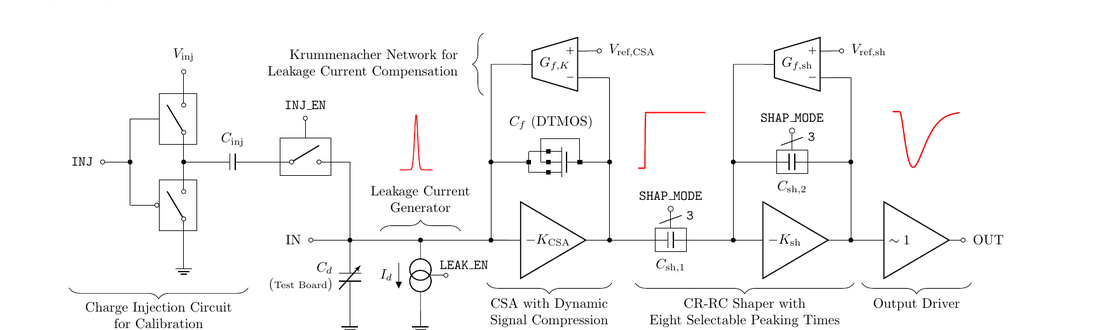
Balloon-borne and spaceborne spectrometers require front-end electronics that achieve a wide dynamic range and high energy resolution while operating under strict thermal constraints. These systems must also minimize power consumption to comply with the limited onboard power budget available during flight. ANTARES4 is a prototype readout application-specific integrated circuit fabricated in a commercial 65 nm complementary metal-oxide-semiconductor process. The chip integrates eight fully analog channels, each comprising a charge-sensitive amplifier followed by a semi-Gaussian CR-RC shaper with selectable peaking times from 0.2 to 1.6 \\\upmu \{μs for signal-to-noise optimization. The charge-sensitive amplifier feedback capacitor is implemented using metal-oxide-semiconductor devices, enabling bilinear input–output behavior and dynamic signal compression with differentiated gain for low-energy x-rays and high-energy charged particles. Four feedback configurations, including both n-type and p-type metal-oxide-semiconductor capacitors with matched gate areas, have been implemented for direct comparison. The circuit operates at approximately 3.5 mW per channel, well within the target budget, and achieves simulated resolutions of 3.5 keV full width at half maximum for a detector capacitance of 40 pF. The input dynamic range extends over four decades, from 10 keV to 100 MeV. The chip has been submitted for fabrication, and a dedicated test board has been developed for forthcoming characterization at room temperature and down to -40 \ ^\textbraceleft∘\textbraceright\text \textbraceleft C\textbraceright\{∘C.
-
 A 65-Nm CMOS Readout Channel Based on a Charge Amplifier With DTMOS Feedback for Dynamic Signal CompressionLuca Ghislotti, Paolo Lazzaroni, Massimo Manghisoni, and 3 more authorsIEEE Transactions on Nuclear Science, Jul 2026
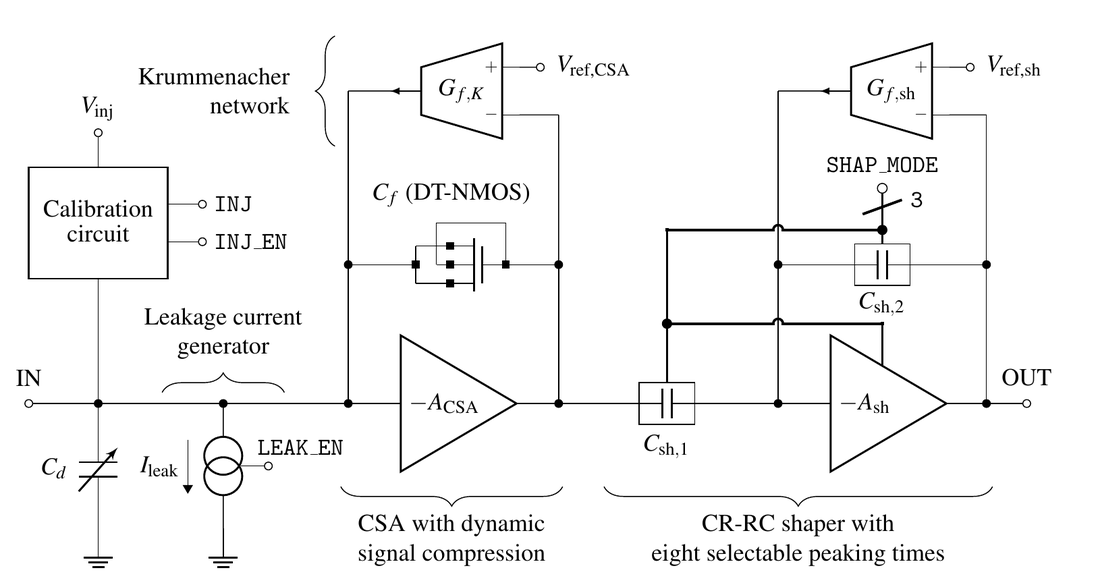
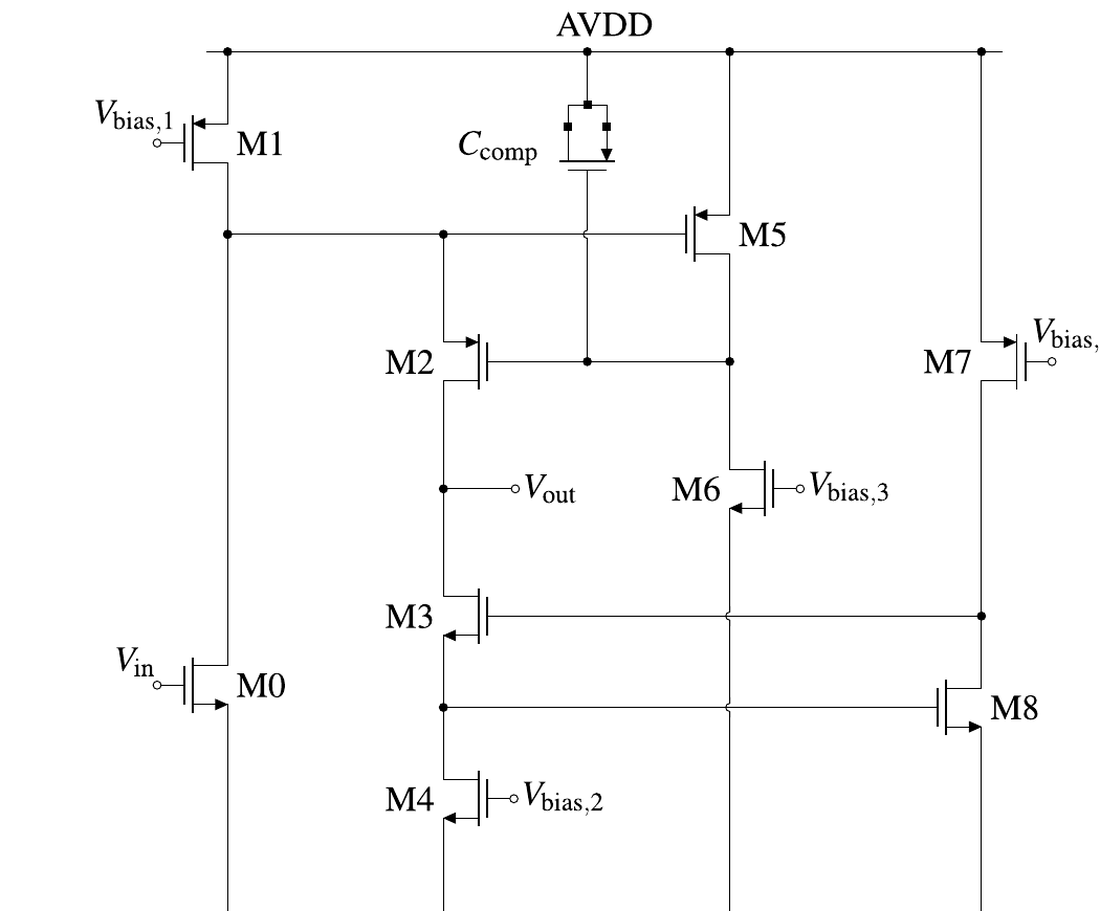
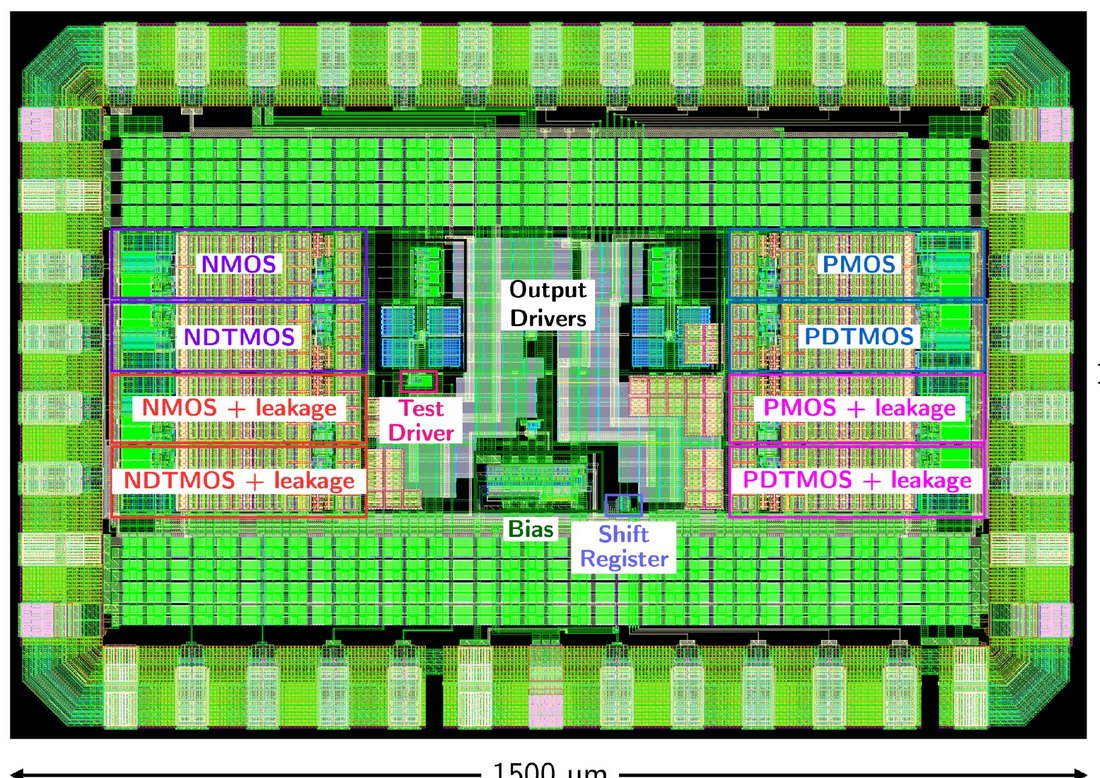
This article presents the design and experimental characterization of a low-noise analog readout channel implemented in a commercial 65-nm CMOS technology. The circuit targets the readout of large-area silicon-strip detectors for astroparticle physics tracker applications and is based on a charge-sensitive amplifier followed by a unipolar semi-Gaussian time-invariant filter. Dynamic signal compression is achieved by exploiting the nonlinear behavior of a dynamic-threshold MOS capacitor in the amplifier feedback network, providing a gain that decreases with increasing input signal and enabling a wide input dynamic range while maintaining high resolution at low deposited charge. The amplifier also incorporates an enhanced Krummenacher feedback network that, through an additional bulk-controlled device, compensates detector leakage currents up to 200 nA. The design criteria and circuit architecture are described, with emphasis on the dynamic-threshold capacitor and the improved charge restoration network. Experimental results are presented to validate and support the proposed design and architectural choices.
2025
-
 Design of the ANTARES4 Readout ASIC for the Second Flight of the GAPS Experiment: Motivations and RequirementsLuca Ghislotti, Paolo Lazzaroni, Massimo Manghisoni, and 5 more authorsParticles, Nov 2025
The General AntiParticle Spectrometer is a balloon-borne experiment designed to search for low-energy cosmic-ray antinuclei as a potential indirect si...
-
 Analog Readout Channel for Continuous-Wave X-Ray Science ApplicationsP. Lazzaroni, M. Hammer, M. Manghisoni, and 4 more authorsIEEE Transactions on Nuclear Science, Jun 2025
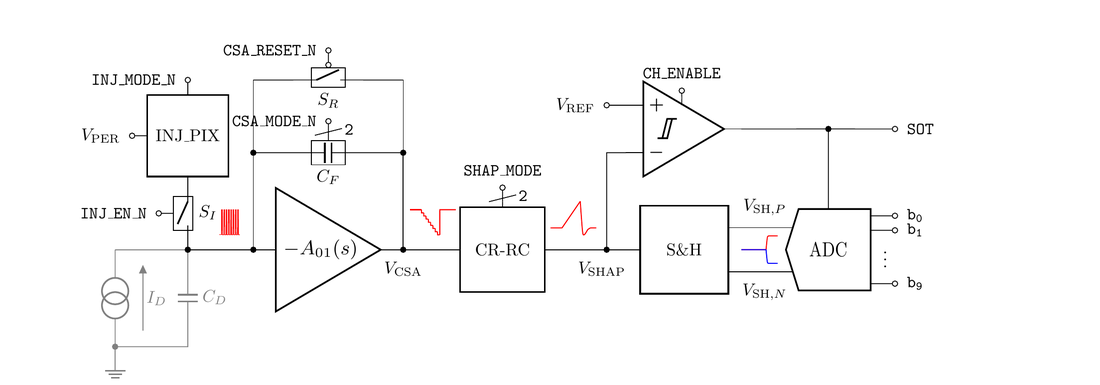
Diffraction-limited storage rings are posing huge challenges to the detectors required in new generation x-ray experiments, especially those based on continuous-wave operation. A modern mixed-signal readout channel demands strict requirements on noise, power consumption, and frame rate, asking for advancements in both analog and digital designs. The proposed readout channel, prototype fast readout channel for ptychography applications (pFREYA), is designed for pixellated detectors to be employed in continuous-wave X-ray science applications (e.g., ptychography) with a frame rate of 1 MHz. It is developed in a commercial 65-nm CMOS technology and features single photon resolution at 5-, 9-, 18-, and 25-keV photon energies, a power consumption of 220 μW, and a pixel area of 150\times 150 μm2. It also offers a 2-bit switchable peaking time selection for signal-to-noise ratio optimization, signal-over-threshold (SOT) identification for zero-suppression, and 10-bit analog-to-digital conversion per channel. In the present work, an overview of the readout channel architecture will be given, and results from the characterization of the charge sensitive amplifier (CSA) and the shaper employed in the architecture will be provided, in addition to the noise performance of the pFREYA channel.
-
 Characterisation of a Mixed-Signal Readout ASIC for Continuous-Wave X-Ray ApplicationsP. Lazzaroni, M. P. Hammer, M. Manghisoni, and 3 more authorsIn 2025 IEEE Nuclear Science Symposium (NSS), Medical Imaging Conference (MIC) and Room Temperature Semiconductor Detector Conference (RTSD), Nov 2025
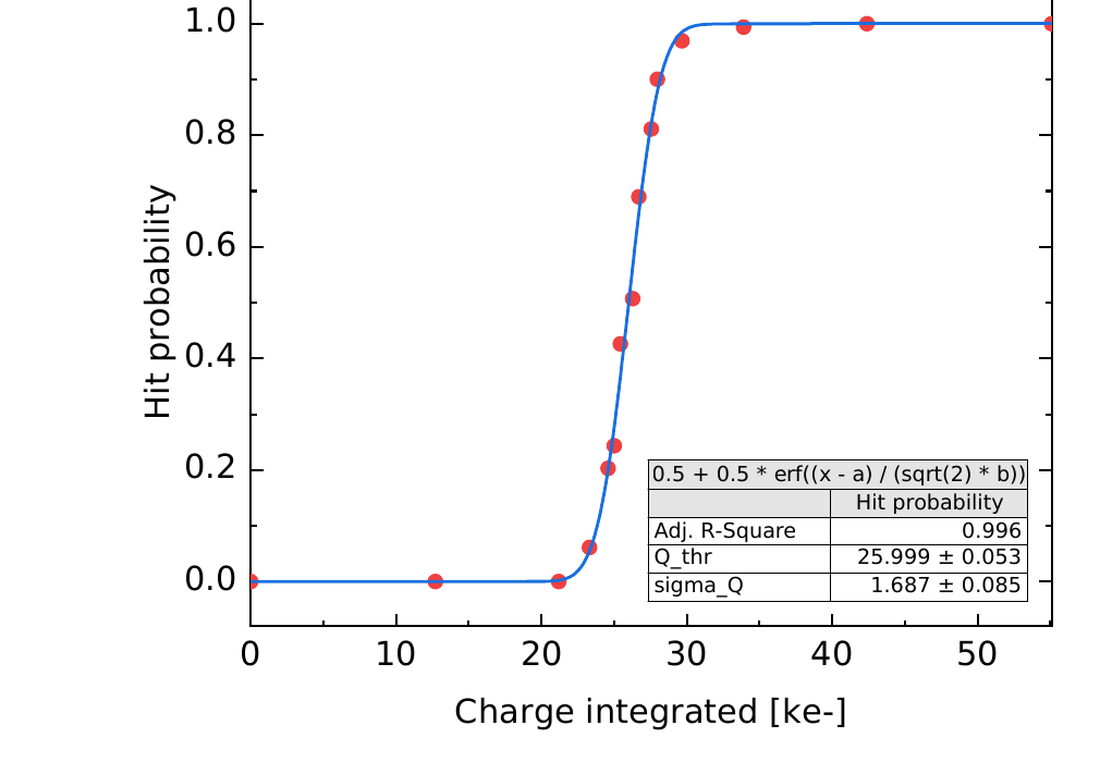
Fourth-generation light sources present novel challenges for detector technology, particularly when a continuous-wave x-ray source is leveraged. Mixed-signal readout channels must simultaneously minimise noise, achieve low power consumption, and support high frame rates, requiring significant advances in both analog and digital design. The pFREYA16 ASIC is a readout channel optimised for pixelated detectors in continuous-wave x-ray applications, such as x-ray ptychography. Fabricated in a commercial 65 nm CMOS process, pFREYA offers single-photon sensitivity at 5,9,18, and 25 keV, with a power budget of 220 uW, and a pixel size of 150 \textum \times 150 \textum. The architecture features 2-bit selectable peaking times for signal-to-noise ratio optimisation, signal-over-threshold detection for efficient zero-suppression, and 10-bit per channel analog-to-digital conversion. This summary details the first results from the characterisation of the analog channel including the signal-over-threshold detection. The conference contribution will add on the sample and hold performance and the SAR ADC.
-
 Design of a Pixel Readout Processor for Nano-meter Resolution X-ray PtychographyPaolo LazzaroniSep 2025
High-luminosity beamlines have been used vastly as a source for the perpetual investigation of the structure of matter. Progressing towards new generations of light storage rings, the specifications on the detectors and front-end mixed-signal electronics have become more and more stringent requiring dedicated studies and exploiting every aspect of the integrated circuit technologies. In the present book an introduction to the basics of radiation interaction with matter and synchrotron systems will be provided to introduce x-ray ptychography, the target application of the developed application specific integrated circuit, pFREYA16. The core of the work will be focused on 1) motivating the development of such a circuit, in the frame of an international collaboration with Argonne National Laboratory (Chicago, IL, US) and the University of Pavia for the development of a top-tier, 1-MHz frame, pixellated detector for nano-meter resolution x- ray ptychography applications, and on 2) analysing each analog and digital block integrated into the produced chips, reporting post-layout simulations and considerations for each of them. The ASIC has been developed in a commercial 65 nm CMOS technology and it is a pixellated readout circuit composed of very low noise and low power pixels. In post-layout simulations, each pixel has reported a single photon detection capability, with an equivalent noise charge of 250 electrons rms, power consumption of 220 \textmu W/pixel, and an input dynamic range of up to 256 photons with three different photon energies: 5 keV, 9 keV, and 25 keV. Each pixel is configurable with variable integration time, four CSA modes, and four selectable peaking times. It also integrates a signal over threshold detection chain to reject unwanted signals and a 10-bit SAR ADC to digitise the output.
-
 DTMOS Feedback Network for Dynamic Signal Compression in Low-Noise Charge AmplifierM. Manghisoni, L. Ghislotti, P. Lazzaroni, and 3 more authorsIn 2025 IEEE Nuclear Science Symposium (NSS), Medical Imaging Conference (MIC) and Room Temperature Semiconductor Detector Conference (RTSD), Nov 2025
This work discusses the design and the experimental results of a low-noise analog readout channel that exploits the non-linear features of a Dynamic Threshold MOS capacitor in the feedback network of the Charge Sensitive Amplifier to achieve dynamic signal compression. The design is implemented in a commercial 65 nm CMOS technology and is developed for the readout of the lithium-drifted silicon, \textSi(\textLi), detectors of the General Antiparticle Spectrometer experiment to search for dark matter. The charge amplifier also includes an improved Krummenacher restoration network that, thanks to an additional bulk control terminal, is able to comply with detector leakage currents up to 200 nA . The paper will outline the design criteria and the architecture of the readout channel with a focus on the Dynamic Threshold MOS capacitor and on the improved charge restoration network used in the CSA feedback. A summary of the channel characterization results is also provided.
-
 X-Ray and Particle Detection With the Si(Li) Tracker Module of the GAPS ExperimentMassimo Manghisoni, Luca Ghislotti, Paolo Lazzaroni, and 7 more authorsIEEE Transactions on Nuclear Science, Nov 2025
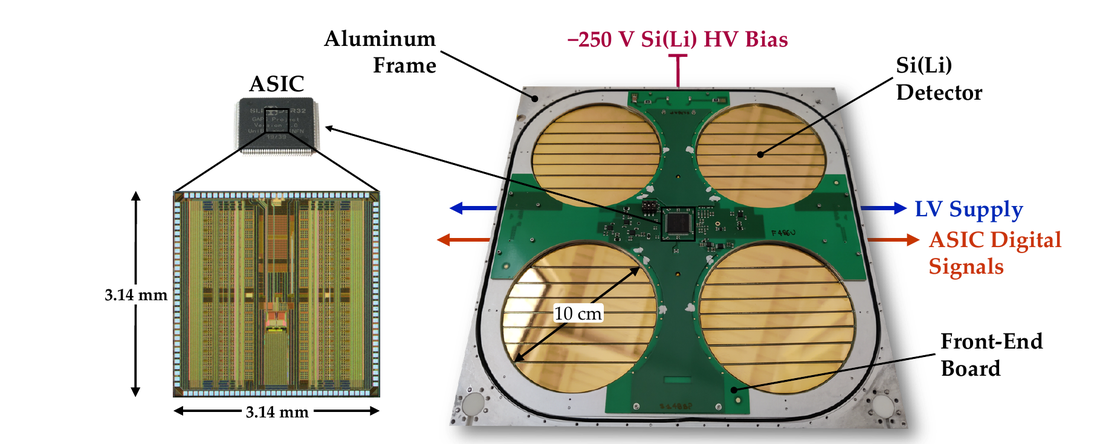
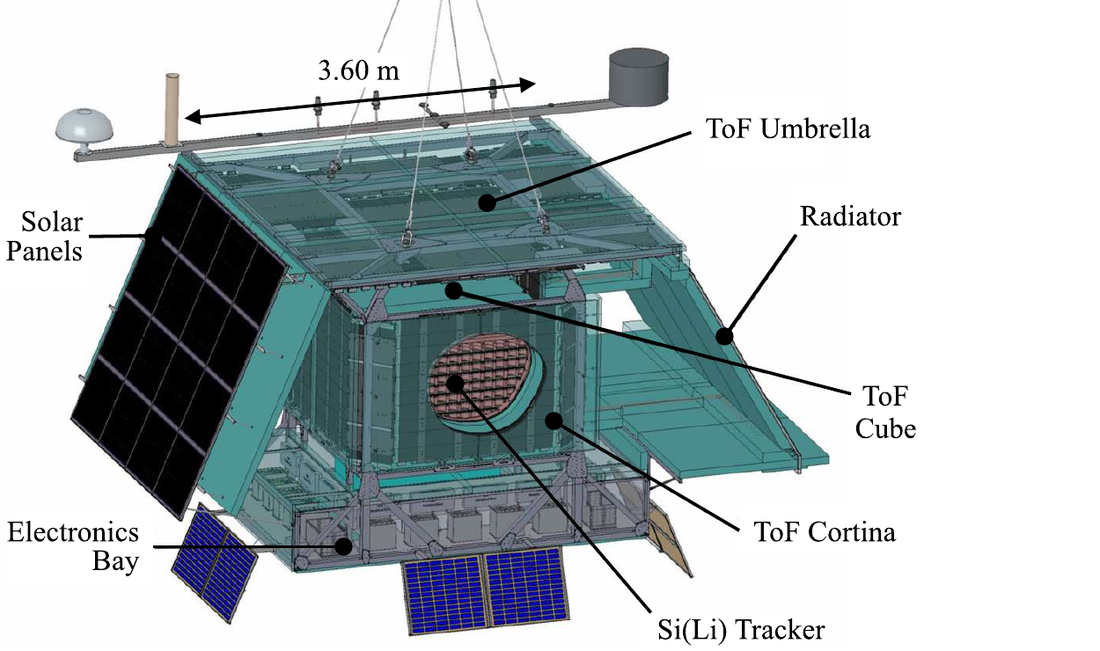
This work describes the architecture and the experimental results from the characterization of the lithium-drifted silicon (Si(Li)) detector module, which constitutes the building block of the tracker in the general antiparticle spectrometer (GAPS) experiment to search for dark matter. The instrument is designed for the identification of low-energy cosmic anti-nuclei (antiprotons, antideuterons, and antihelium) to be performed during an Antarctic long-duration balloon flight scheduled for late 2025. The GAPS Si(Li) tracker, that is the core of the instrument, is the assembly of 252 modules, each comprised of four Si(Li) detectors and a full custom-integrated circuit designed for detector readout and produced in a commercial 180-nm planar CMOS technology. A general overview of the detector module architecture and its components is provided, together with a description of the test setup and the experimental results obtained from the characterization of the low-noise analog readout channel. In order to verify the effective operation of the entire module, results concerning the detection of X-rays from a 241Am source and cosmic muons are also provided.
-
 Humidity- and Temperature-Sensing Properties of 2D-Layered Tungsten Di-Selenide (2H-WSe2) Electroconductive Coatings for Cotton-Based Smart TextilesValentina Trovato, Rajashree Konar, Eti Teblum, and 4 more authorsPolymers (Basel), Mar 2025
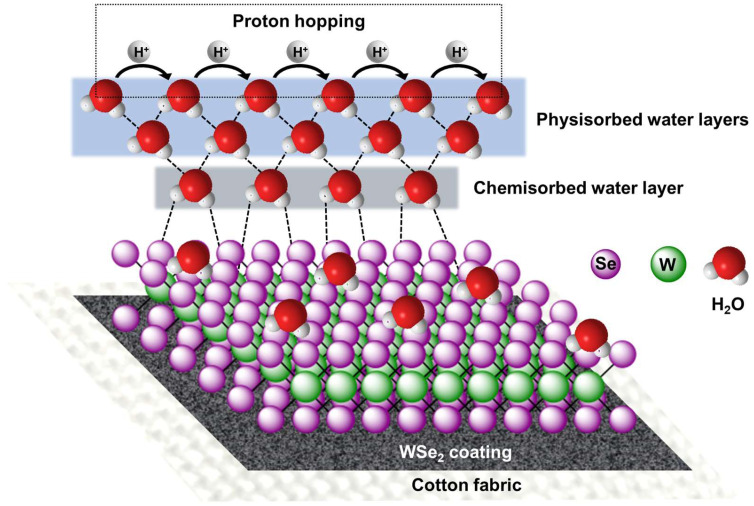
Electroconductive textiles (e-Textiles) are vital in developing wearable sensors that preserve the comfort and characteristics of textiles. Among two-dimensional (2D) transition metal dichalcogenides (TMDs), considered a promising option for sensor applications, tungsten di-selenide (WSe2) homostructures have been used as humidity- and temperature-sensing materials for developing e-textiles, as mentioned in a first-of-its-kind report. Exfoliated chemical vapor deposition (CVD)-grown 2H-WSe2 nanosheets were dispersed in hydroalcoholic solutions using an amino-functionalized silane to improve dispersion. Acrylic thickener was added to create 2H-WSe2-based pastes, which were applied onto cotton using the knife-over-roll technique to obtain thin, flexible electroconductive coatings on textiles. Various characterization techniques confirmed the even distribution of 2D-WSe2-based coatings on fabrics and the maintenance of textile comfort and wearability. The conductivity of coated fabrics was measured at room temperature and ranged between 2.9 \texttimes 108 and 1.6 \texttimes 109 \textohm sq-1. The WSe2-based textile sensors functioned well as resistance humidity detectors within 30–90% relative humidity (RH), revealing good repeatability and sensitivity after multiple exposure cycles. To a lesser extent, WSe2-based textile sensors act as temperature detectors within 20–60 ^∘C with limited repeatability. The 2D-based textiles exhibited a quadratic dependence of resistance on temperature and a characteristic thermal hysteresis. This proposed strategy marks a significant milestone in developing scalable and flexible 2D TMD-based detectors with great potential for wearable sensing devices.
-
 Assessing Low-Cost PM and MOx Sensors for Enhanced Outdoor Air Quality MonitoringMatteo Verzeroli, Luigi Gaioni, and Paolo LazzaroniIn 2025 IEEE Sensors Applications Symposium (SAS), Jul 2025
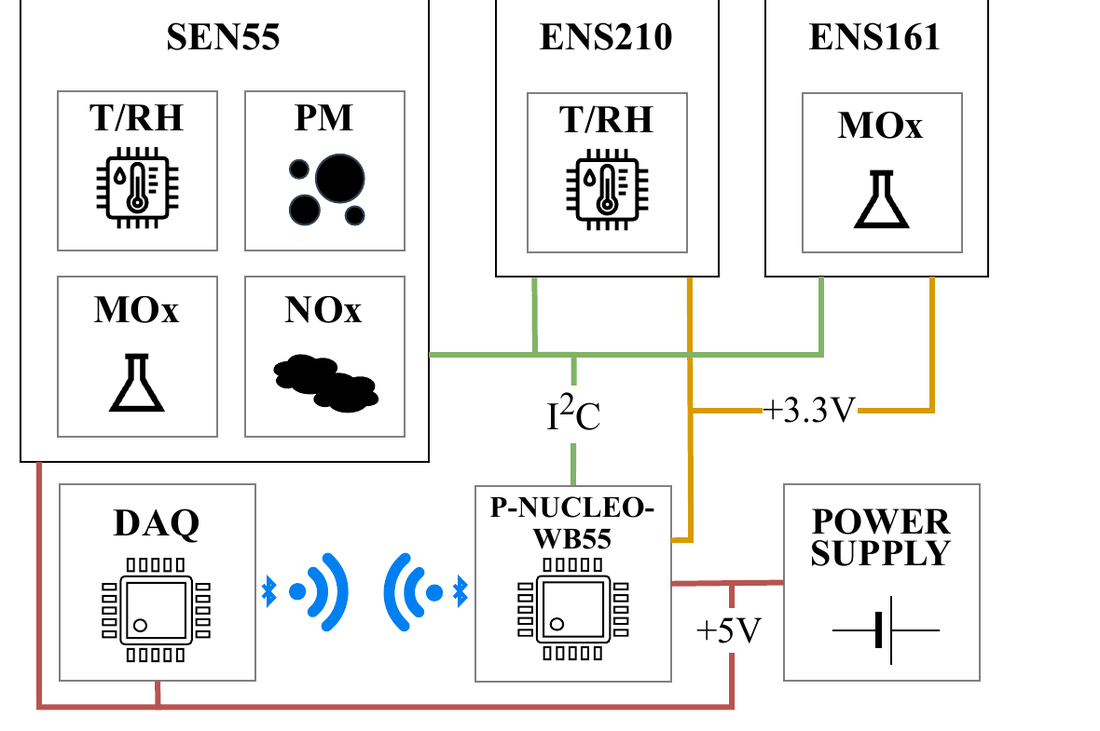
A low-cost air quality station has been developed to investigate the use of metal-oxide sensors in outdoor air quality assessment. This study presents the results of an outdoor measurement campaign conducted in Dalmine, Northern Italy, for 67 days. The station was equipped with an optical particle counter for particulate matter (PM) measurements and metaloxide (MOx) sensors for volatile organic compounds (VOCs) detection. Measurements were compared with data from a fixed reference station operated by ARPA Lombardia. The PM sensor exhibited a strong correlation with reference values, although relative humidity influenced measurement accuracy. Additionally, MOx sensor signals demonstrated a moderate inverse correlation with PM2.5 concentration, highlighting their potential for qualitative air quality assessment. A linear regression model was applied to analyse this correlation, considering environmental factors such as absolute humidity. The results suggest that low-cost MOx sensors can complement traditional air quality monitoring systems and could be leveraged in future IoT-based environmental monitoring applications.
2024
-
 Index Air Quality Monitoring for Light and Active MobilityStefano Botticini, Elisabetta Comini, Salvatore Dello Iacono, and 9 more authorsSensors, Jan 2024
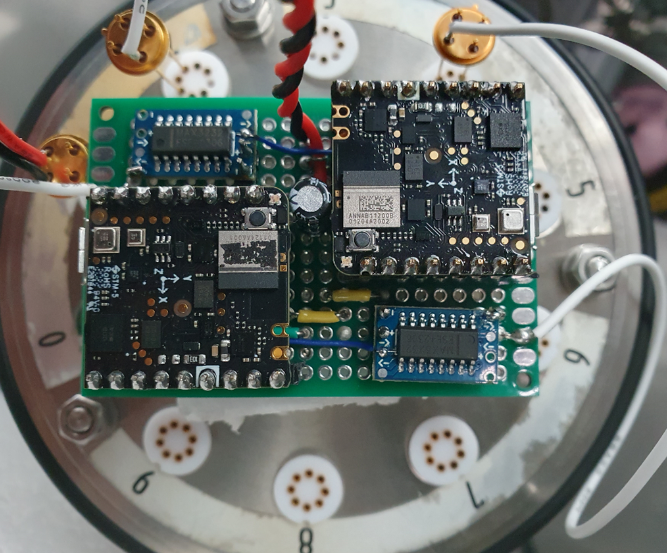
Light and active mobility, as well as multimodal mobility, could significantly contribute to decarbonization. Air quality is a key parameter to monitor the environment in terms of health and leisure benefits. In a possible scenario, wearables and recharge stations could supply information about a distributed monitoring system of air quality. The availability of low-power, smart, low-cost, compact embedded systems, such as Arduino Nicla Sense ME, based on BME688 by Bosch, Reutlingen, Germany, and powered by suitable software tools, can provide the hardware to be easily integrated into wearables as well as in solar-powered EVSE (Electric Vehicle Supply Equipment) for scooters and e-bikes. In this way, each e-vehicle, bike, or EVSE can contribute to a distributed monitoring network providing real-time information about micro-climate and pollution. This work experimentally investigates the capability of the BME688 environmental sensor to provide useful and detailed information about air quality. Initial experimental results from measurements in non-controlled and controlled environments show that BME688 is suited to detect the human-perceived air quality. CO2 readout can also be significant for other gas (e.g., CO), while IAQ (Index for Air Quality, from 0 to 500) is heavily affected by relative humidity, and its significance below 250 is quite low for an outdoor uncontrolled environment.
-
 The GAPS Time-of-Flight DetectorSydney Nicole Feldman and on behalf of the GAPS CollaborationIn Proceedings of 38th International Cosmic Ray Conference — PoS(ICRC2023), Sep 2024
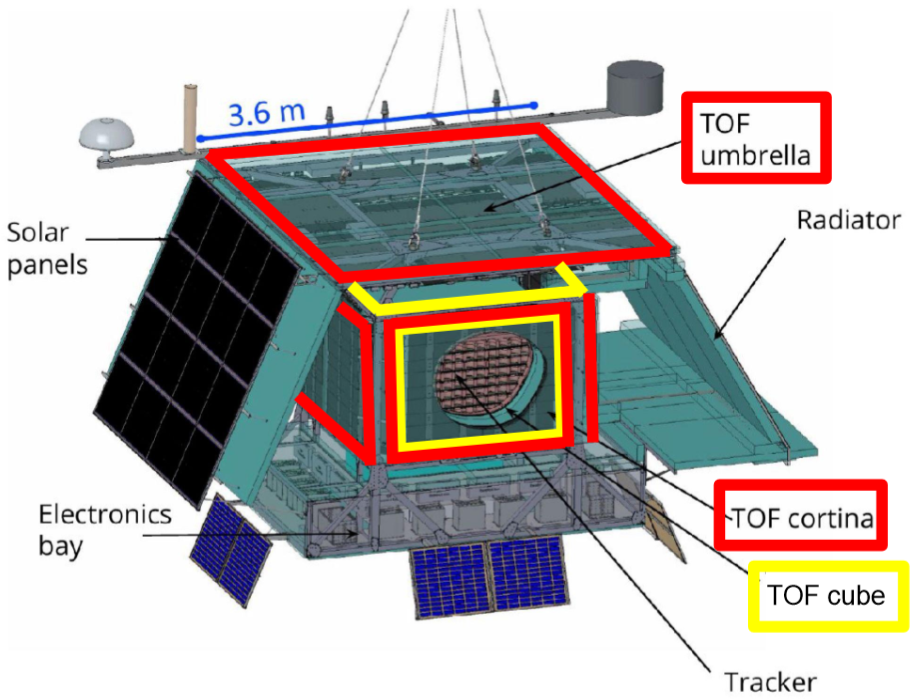
The General Antiparticle Spectrometer (GAPS) Antarctic long duration balloon mission is scheduled for launch during the austral summer of 2024-25. Its novel detection technique, based on exotic atom formation, excitation, and decay, is specifically designed for the detection of slow moving cosmic antiprotons and antideuterons. Such antinuclei are predicted by a wide variety of allowed dark matter models, as well as other astrophysical theories like primordial black holes. There are two main components of the GAPS instrument: a large-area tracker and a surrounding time-of-flight system (TOF). The combination of these two systems allows GAPS to effectively differentiate between species of negatively-charged antinuclei and determine the energy deposition, velocity, and trajectory of particles interacting with the detector. This contribution will focus on the TOF, which determines the velocity of the incoming antiparticle and provides the trigger to the experiment. We will give an overview of the TOF detector, an explanation of relevant electronics, and a report on its construction and preliminary performance. The TOF is composed of 160 thin plastic scintillator paddles ranging in length from 1.5 to 1.8 meters. At each paddle end, signals from six silicon photomultipliers are combined to produce two copies of the resulting waveform: one to form the trigger and one for data readout. This design is optimized for low mass and fast data acquisition while still maintaining good light collection.
-
 Energy Threshold Calibration of the GAPS Experiment Si(Li) Tracker Readout ElectronicsL. Ghislotti, M. Boezio, L. Fabris, and 6 more authorsIl Nuovo Cimento C, Apr 2024
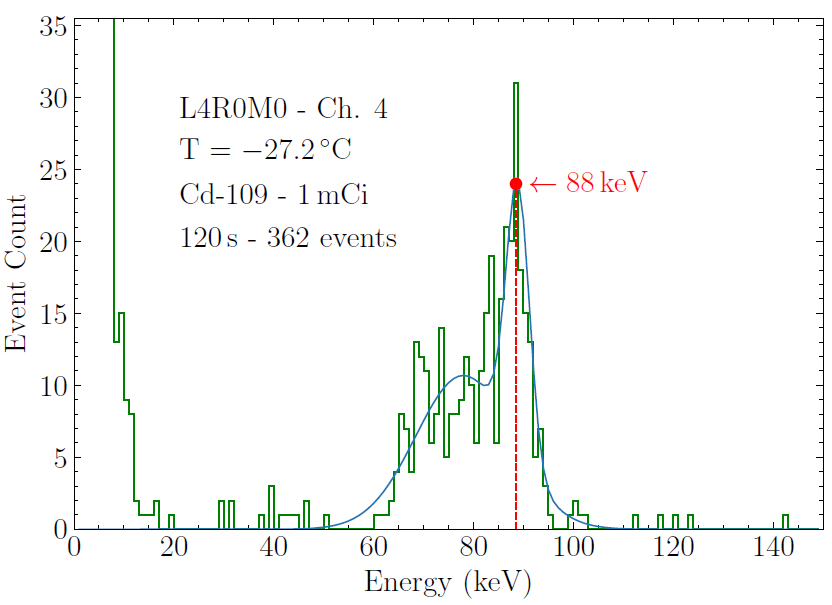
GAPS (General AntiParticle Spectrometer) is a stratospheric balloon experiment designed to detect low-energy cosmic ray antinuclei ( <0.25 GeV) as an indirect signature of dark matter. The experiment exploits an innovative particle identification approach based on the formation of an excited atom and its consequent de-excitation and decay. GAPS will provide unprecedented sensitivity to cosmic antideuterons, an antiproton spectrum in a hitherto unexplored energy range and high sensitivity to cosmic antihelium. The first flight is foreseen to take place from the McMurdo Station in Antarctica during the austral summer of 2024. The instrument is currently undergoing integration and calibration in anticipation of launch. In this paper, the latest tracker electronics energy threshold calibration results will be presented.
-
 Low-Noise Wide Dynamic Range Charge Sensitive Amplifier in 65 Nm CMOS Technology for the Second Flight of the GAPS ExperimentLuca Ghislotti, Paolo Lazzaroni, Massimo Manghisoni, and 1 more authorIn 2024 19th Conference on Ph.D Research in Microelectronics and Electronics (PRIME), Jun 2024
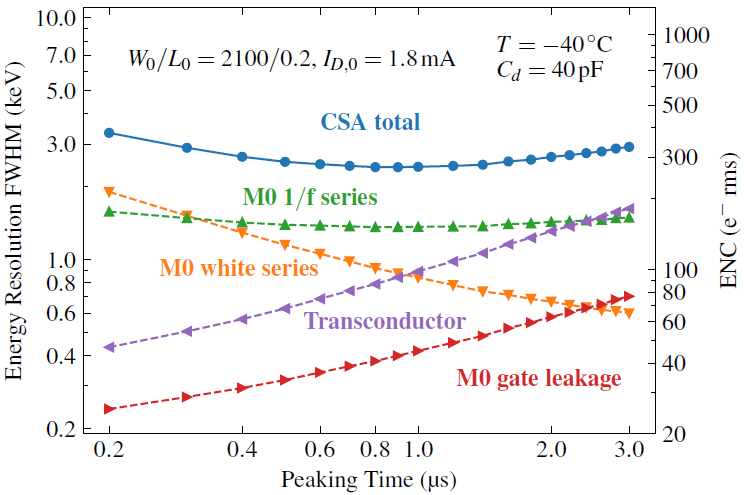
This work describes a low-noise charge sensitive amplifier designed in a commercial 65nm CMOS technology for the second flight of the General AntiParticle Spectrometer balloon experiment, aimed at the indirect search of dark matter. The circuit has been developed as part of the upgrade of the chip employed in the readout of the lithium-drifted silicon detectors of the inner tracker and features dynamic signal compression to cope with the wide input dynamic range. A novel solution using dynamic threshold MOSFETs for the non-linear feedback capacitor implementation has been investigated. The paper will discuss the amplifier architecture, with a focus on the input and feedback device design and the relevant simulation results.
-
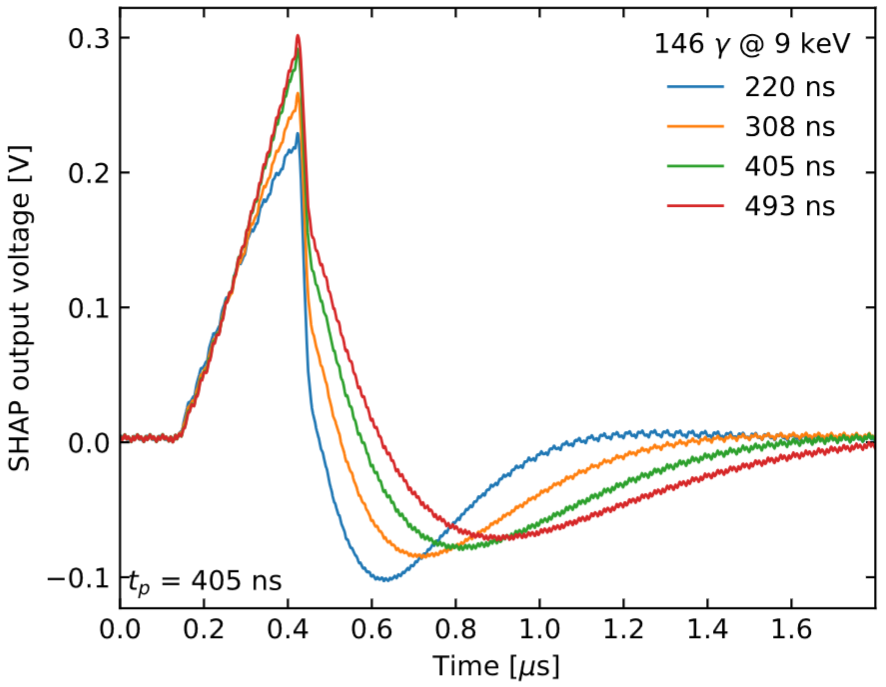 Experimental Results of the pFREYA16 ASIC for X-Ray Ptychography in Continuous Wave Light SourcesP. Lazzaroni, M. Hammer, M. Manghisoni, and 5 more authorsJ. Inst., Dec 2024
The pFREYA16, prototype Fast Readout for ptYchography Applications with 16 channels, ASIC is a pixellated 8-by-2 readout matrix developed for ptychography experiments based on fourth generation storage ring light sources, also known as diffraction-limited storage rings (DLSR), pushing towards continuous wave operation. The target of the experiment is to obtain a 128-by-128 matrix of pixels, working at a frame rate of 1 MHz with single-photon resolution, as well as low-noise and low-power figures, in a modest-size pixel area of 150 μm \texttimes 150 μm. The readout chain is composed of a switch-reset CSA and a semi-Gaussian unipolar RC-CR shaper, and includes signal discrimination, zero-suppression capabilities, and pixel-level analog to digital conversion. The ASIC is also configurable for 5, 9, 18, or 25 keV input photon energy, with a full well capacity of 256 equivalent photons in each mode, and four different peaking times are available for noise optimisation. The paper will focus on the characterisation of the CSA and the shaper stage.
-
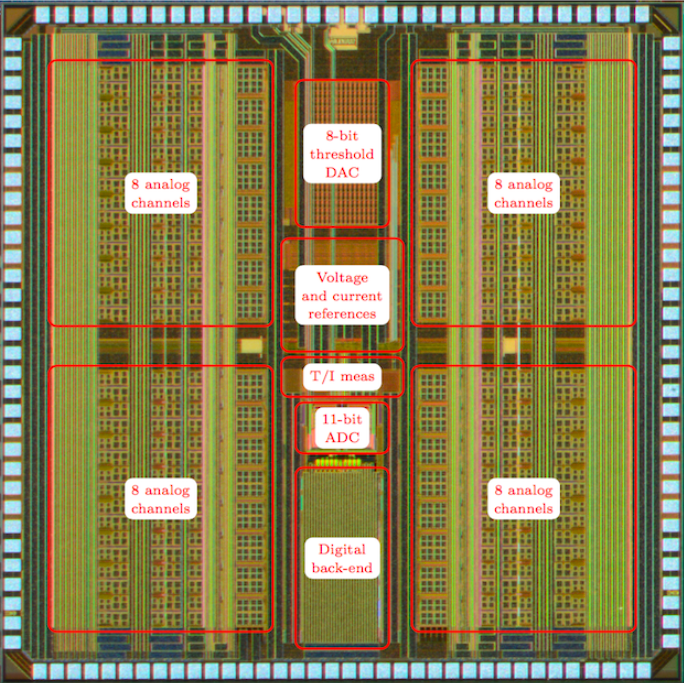 A 32-Channel Readout ASIC for X-Ray Spectrometry and Tracking in the GAPS ExperimentMassimo Manghisoni, Luca Ghislotti, Paolo Lazzaroni, and 6 more authorsIEEE Transactions on Nuclear Science, Jan 2024
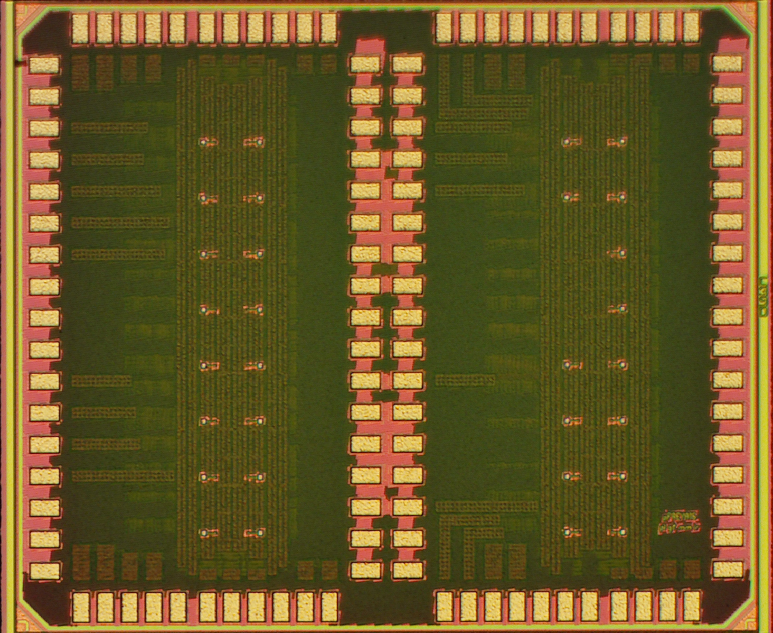
This work describes the architecture and the experimental results from the characterization of a 32-channel mixed-signal application-specific integrated circuit (ASIC) developed for the readout of the lithium-drifted silicon (Si(Li)), detectors of the general antiparticle spectrometer (GAPS) experiment dedicated to searching for dark matter. The instrument is designed for the identification of antiprotons, antideuterons, and antihelium nuclei from cosmic rays during an Antarctic balloon mission scheduled for late 2024. A full-custom integrated circuit, named SLIDER32 (32-channel Si-Li detector readout) ASIC, has been produced in a commercial 180-nm CMOS technology. The ASIC comprises 32 low-noise analog readout channels featuring dynamic signal compression to comply with the wide input range, an 11-bit successive approximation register (SAR) analog-to-digital converter (ADC), and a digital back-end section which is responsible for channel setting and for sending digital information to the data acquisition system (DAQ). The circuit design criteria and the experimental results are discussed in this article.
-
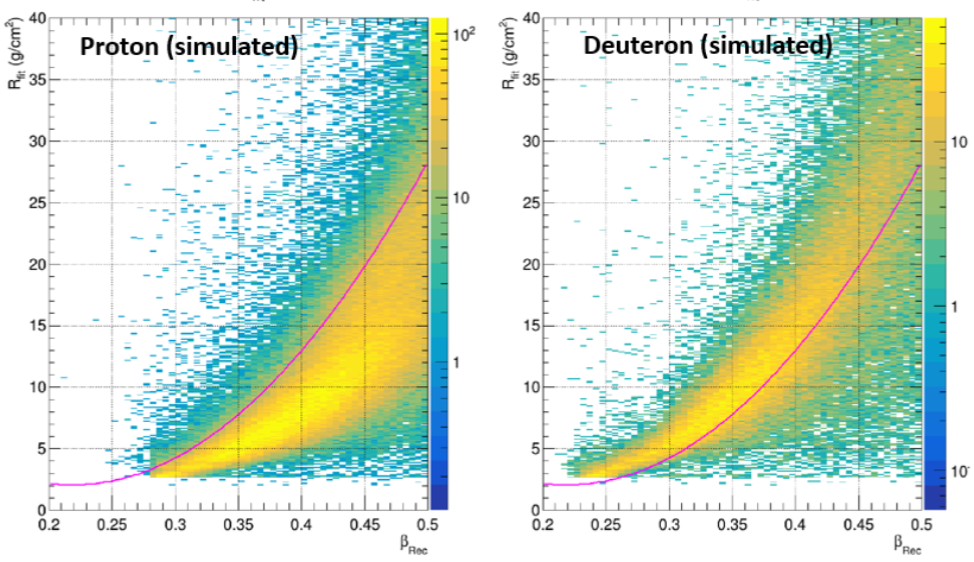 The Identification of the Cosmic-Ray Light Nuclei with the GAPS ExperimentRiccardo Munini, Alex Lenni, and on behalf of the GAPS CollaborationIn Proceedings of 38th International Cosmic Ray Conference — PoS(ICRC2023), Sep 2024
GAPS (General AntiParticle Spectrometer) is a balloon-borne large-acceptance experiment de- signed to detect low-energy (< 0.25 GeV/n) cosmic-ray antinuclei during three ∼35-day Antarctic flights, the first of these planned for the 2024-2025 austral summer. The GAPS apparatus, cur- rently in preparation for the first flight, consists of a tracker equipped with large-area lithium-drifted silicon detectors and surrounded by a large-acceptance time-of-flight system made of plastic scin- tillators. This design has been optimized to perform a novel antiparticle identification technique based on an antinucleus capture and the subsequent exotic atom formation and decay, allowing more active target material and a larger geometrical acceptance since no magnet is required. Al- though detecting the cosmic-ray antinuclei as an indirect dark-matter signature is the primary goal of GAPS, many low-energy cosmic-ray nuclei will also be recorded. Nuclei do not form exotic atoms in the GAPS detectors, and their detection is based on the measurements of the ionization energy depositions and the evaluation of the kinetic energy and the stopping depth relative to the measured velocity. An algorithm was developed to fit the slow-down of particles and antiparticles tracked inside the GAPS apparatus. The quantities fitted by this algorithm, together with the mea- sured velocity and energy deposition information, allow the identification of protons, deuterons, and helium nuclei and the measurement of their spectra in a low-energy range (< 0.25 GeV/n). The results of this analysis, based on detailed Monte Carlo simulation studies, will be presented in this contribution.
-
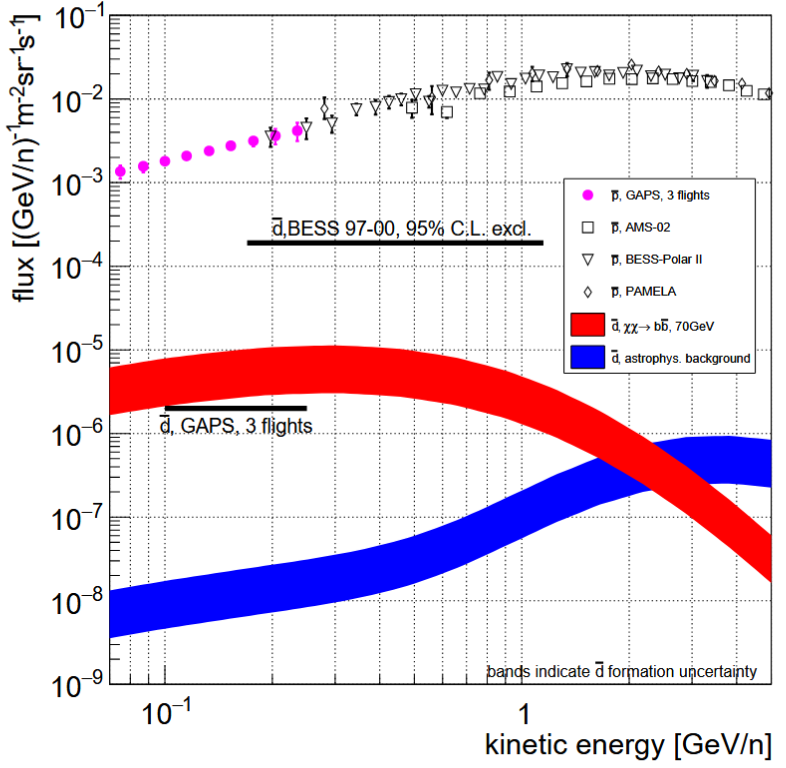 Integration and Calibration of the GAPS Antarctic Balloon PayloadRiccardo Munini and on behalf of the GAPS CollaborationIn Proceedings of 38th International Cosmic Ray Conference — PoS(ICRC2023), Sep 2024
With its inaugural Antarctic long-duration balloon mission in December 2023, the General An- tiparticle Spectrometer (GAPS) will become the first experiment optimized to detect cosmic-ray antinuclei below 0.25 GeV/\emphn. Detection of a single antideuteron at this energy scale would be a smoking-gun signature of new physics such as dark matter. The GAPS program will also provide a precision antiproton spectrum in a previously unprobed low-energy range, as well as leading sensitivity to antihelium-3. This new parameter space is accessible thanks to a novel par- ticle identification method based on exotic atom formation, de-excitation, and decay. The method provides a unique handle for the negatively-charged antinuclei, facilitating excellent rejection of the positive-nucleus background, and does not require a magnet, enabling a large sensitive area for rare events. The GAPS instrument is designed to provide excellent discrimination power for rare events within the power and mass constraints of a long-duration balloon. The time-of-flight, composed of 160 scintillator paddles, provides the system trigger as well as the GAPS energy scale. The 2.5 m3 tracker volume is instrumented with 1000 10-cm-diameter silicon sensors which serve as the target, X-ray spectrometer, and particle tracker. Together, a large-area radiator and an integrated oscillating heat pipe system cool the payload without a bulky cryostat. This contribution reports the integration and calibration of the GAPS science payload, including the performance of the sensitive detector subsystems, the cooling system, the power distribution, and data acquisition and onboard event processing.
-
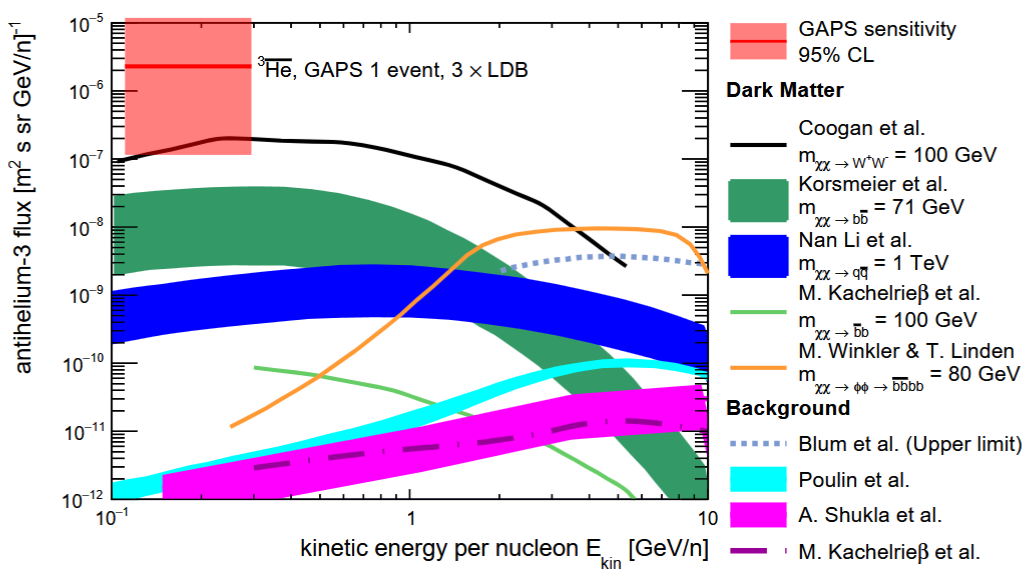 The GAPS Experiment - a Search for Light Cosmic Ray AntinucleiAchim Stoessl and on behalf of the GAPS CollaborationIn Proceedings of 38th International Cosmic Ray Conference — PoS(ICRC2023), Sep 2024
The General Anti Particle Spectrometer (GAPS) is a balloon-borne cosmic-ray experiment which is currently in its last phase of construction, undergoing system testing, and scheduled for a long-duration balloon flight from McMurdo Station in the Antarctic in December 2024. Its primary scientific goal is the search for light antinuclei in cosmic rays at kinetic energies below 0.25 GeV/\n\. This energy region is especially of interest for beyond-the-standard model dark matter searches and is still mostly uncharted. Searches for light antimatter nuclei with energies below ~0.25 GeV/\n are a novel approach to the search for dark matter because wide range of dark matter models proposes annihilation or decay into matter-antimatter pairs. GAPS will yield unprecedented sensitivity to low-energy antideuterons and will measure the low-energy antiproton spectrum with high statistics and precision. To reach the required sensitivity, the GAPS detector incorporates a new approach for antimatter detection, utilizing a tracker with custom, lithium-drifted silicon detectors, designed to measure the X-ray cascade expected from antimatter capture and charged particles from the subsequent annihilation. It also utilizes a fast time-of-flight system, allowing for a high-precision beta measurement. This proceeding highlights GAPS scientific goals.
-
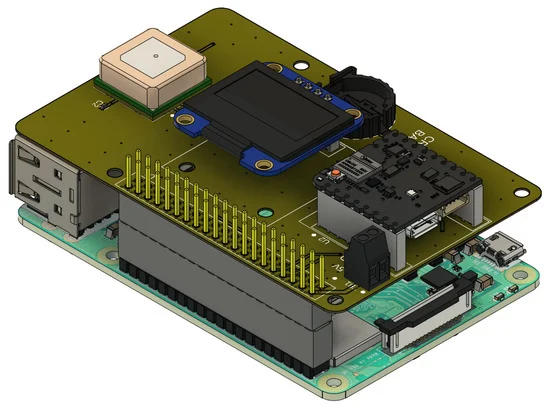 Advancing Sustainable Mobility: A Data Acquisition System for Light Vehicles and Active MobilityMatteo Verzeroli, Luigi Gaioni, Andrea Galliani, and 3 more authorsElectronics, Jan 2024
Active mobility and light vehicles, such as e-bikes, are gaining increasing attention as sustainable transportation alternatives to internal combustion solutions. In this context, collecting comprehensive data on environmental conditions, vehicle performance, and user interaction is crucial for improving system efficiency and user experience. This paper presents a data acquisition system designed to collect data from multiple sensor platforms. The architecture is optimized to maintain low power consumption and operate within limited computational resources, making it suitable for real-time data acquisition on light vehicles. To achieve this, a data acquisition module was developed using a single-board computer integrated with a custom shield, which also captures data related to the assistance of an e-bike motor through a wireless interface. The paper provides an in-depth discussion of the architecture and software development, along with a detailed overview of the sensors used. A demonstrator was created to verify the system architecture idea and prove the potentialities of the system overall. The demonstrator has been qualified by professional and semi-professional riders in the framework of the Giro-E, a cyclist event which took place in May 2024, on the same roads of the Giro d’Italia. Finally, some preliminary analyses on the data acquired are provided to show the performance of the system, particularly in reconstructing the user behavior, the environmental parameters, and the type of road.
-
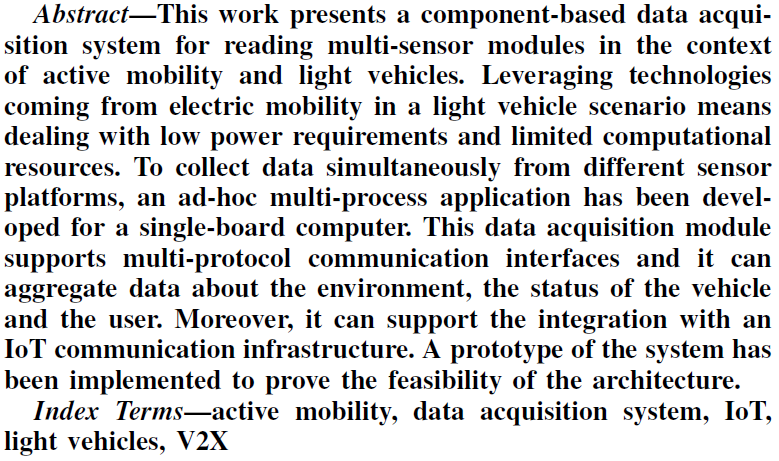 Empowering Smart Mobility with a Component-based Data Acquisition System for Multi-sensor ReadoutMatteo Verzeroli, Andrea Galliani, Luca Ghislotti, and 3 more authorsIn 2024 19th Conference on Ph.D Research in Microelectronics and Electronics (PRIME), Jun 2024
This work presents a component-based data acqui-sition system for reading multi-sensor modules in the context of active mobility and light vehicles. Leveraging technologies coming from electric mobility in a light vehicle scenario means dealing with low power requirements and limited computational resources. To collect data simultaneously from different sensor platforms, an ad-hoc multi-process application has been developed for a single-board computer. This data acquisition module supports multi-protocol communication interfaces and it can aggregate data about the environment, the status of the vehicle and the user. Moreover, it can support the integration with an IoT communication infrastructure. A prototype of the system has been implemented to prove the feasibility of the architecture.
2023
-
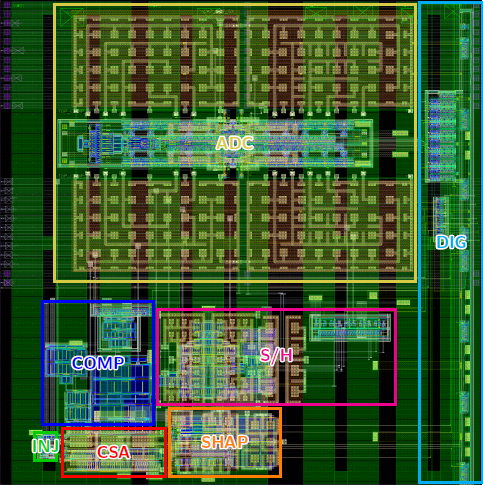 Characterisation of the pFREYA16 ASIC for Low-Noise Ptychography ApplicationsP. Lazzaroni, M. P. Hammer, M. Manghisoni, and 4 more authorsIn 2023 IEEE Nuclear Science Symposium, Medical Imaging Conference and International Symposium on Room-Temperature Semiconductor Detectors (NSS MIC RTSD), Nov 2023
The pFREYA16 ASIC is an 8 x 2 prototype pixellated matrix developed to comply with the stringent requirements on both noise performance and frame acquisition speed imposed by recent x-ray ptychography applications. Namely, each pixel in the matrix was designed focusing mainly on single photon detection at 5 keV, 9 keV and 25 keV photon energies, with an equivalent noise charge of 250 e-rms obtained in post-layout simulations in the nominal case, and 1 MHz conversion rate, comprising integration by means of a charge sensitive amplifier, signal shaping through an RC-CR stage, discrimination of interesting signals and analog to digital conversion. The whole chain is integrated in each pixel. pFREYA16 is the first step to validate the architecture of a future 128-by-128 matrix. The channel power consumption is 220 μW in post-layout simulations in the nominal case and the elementary cell area occupation is 150 μm x 150 μm. The ASIC, together with a test structure matrix, has been submitted in Q4 2022, is currently in the assembly house for bonding and will be received by the end of Q2 2023. This summary will focus on the pFREYA16 design and development, while the conference presentation will also showcase the results from the characterisation of the produced chips.
-
 A Mixed-Signal Processor for X-ray Spectrometry and Tracking in the GAPS ExperimentValerio Re, Luca Ghislotti, Paolo Lazzaroni, and 6 more authorsNuclear Instruments and Methods in Physics Research Section A: Accelerators, Spectrometers, Detectors and Associated Equipment, Jan 2023
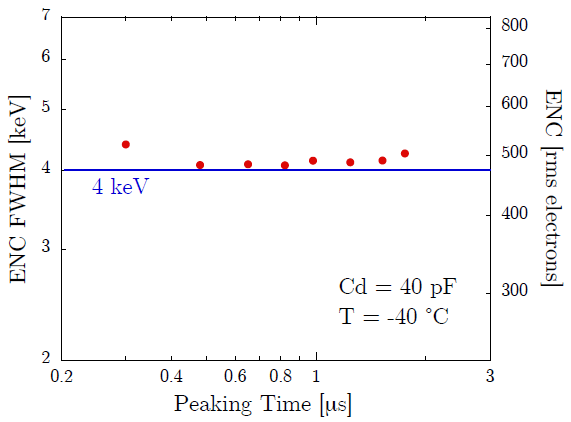
This paper reports the design and experimental results from the characterization of an integrated circuit developed for the readout of the X-ray spectrometer and tracking system of the General AntiParticle Spectrometer (GAPS) balloon mission. GAPS will search for an indirect signature of dark matter through the detection of low-energy (<0.25 GeV/n) cosmic-ray antiprotons, antideuterons and antihelium nuclei. The ASIC, named SLIDER32 (32 channels Si-LI DEtector Readout ASIC), was fabricated in a 180 nm CMOS technology and is comprised of 32 analog readout channels, an 11-bit SAR ADC and a digital back-end section which is responsible for defining channel settings and for sending digital information to the data acquisition system. The core of the ASIC is a low-noise analog channel implementing a dynamic signal compression which makes the chip suitable for resolving both X-rays in the range of 20 to 100 keV and charged particles with energy deposition of up to 100 MeV. It features an energy resolution of 4 keV FWHM in the 20–100 keV range with a 40 pF detector capacitance, to clearly distinguish X-rays from antiprotonic or antideuteronic exotic atoms. The readout electronics of the ASIC will run at a temperature of about –40 ^∘C, complying with a detector leakage current of the order of 5–10 nA per strip.
-
 The 32 Analog Channels Readout for the Long-Flight GAPS Balloon Experiment Tracking SystemE. Riceputi, M. Boezio, L. Fabris, and 6 more authorsIn Proceedings of SIE 2022, 2023
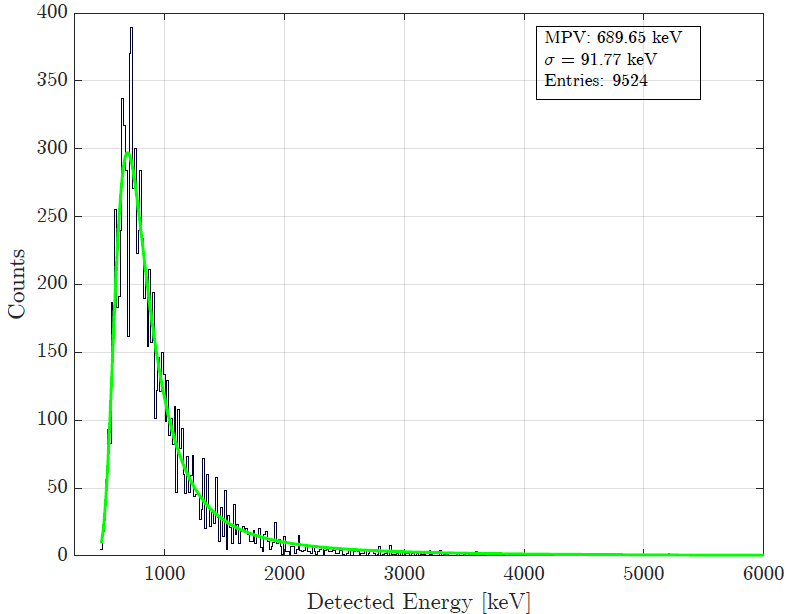
The paper describes the main results of the characterization of the flight ASIC developed for the readout of a lithium-drifted silicon, Si(Li), detector-based tracker. The system aims to detect indirect signatures of dark matter through the identification of low-energy (\{< \textbraceleft 0.25\textbraceright\,\text \textbraceleft GeV/n\textbraceright\{<0.25GeV/n) cosmic-ray antiprotons, antideuterons, and antihelium. This instrument is developed in the frame of the GAPS (General AntiParticle Spectrometer) balloon experiment. The developed electronics consists of a 32-channels mixed-signal ASIC, designed in a commercial 180 nm CMOS technology and an ad-hoc front-end board (FEB). Data from charged particle detection are also reported.
-
 Experimental Results from the Characterization of a 32-Channels Mixed-Signal Processor for the GAPS ExperimentE. Riceputi, M. Manghisoni, V. Re, and 9 more authorsIn 2023 IEEE Nuclear Science Symposium, Medical Imaging Conference and International Symposium on Room-Temperature Semiconductor Detectors (NSS MIC RTSD), Nov 2023
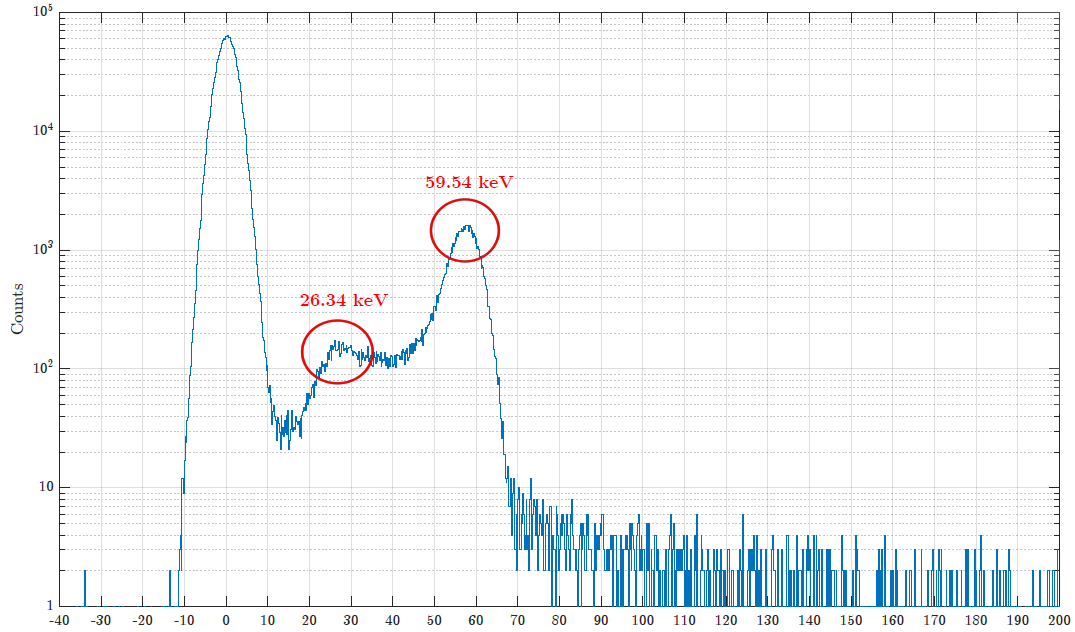
This work describes the experimental results obtained from the characterization of a 32-channels readout ASIC that is the core of a module composed by 4 Lithium-drifted Silicon, Si(Li), detectors. The module is the building block of a tracker in an upcoming balloon experiment. The activity is carried out within the General AntiParticle Spectrometer (GAPS) international collaboration, whose objective is the indirect detection of dark matter through the detection of antiparticles present in cosmic rays at low energies. The balloon flight is foreseen in 2024 from the McMurdo station in Antarctica. The ASIC is designed in a 180 nm CMOS technology and has 32 low-noise analog readout channels featuring a dynamic compression of the signal, an 11-bit SAR ADC, and a digital back-end section responsible for channel setting and for sending digital information to the data acquisition system of the tracker. This work has a twofold goal: it intends on the one hand to verify the performance of the circuit, on the other to select at least 300 good samples to be used for the assembly of the GAPS Si(Li) tracker.
2022
-
 FALCON Readout Channel for X-ray Ptychography ApplicationsPaolo Lazzaroni, Michael Hammer, Massimo Manghisoni, and 3 more authorsIn 2022 17th Conference on Ph.D Research in Microelectronics and Electronics (PRIME), Jun 2022
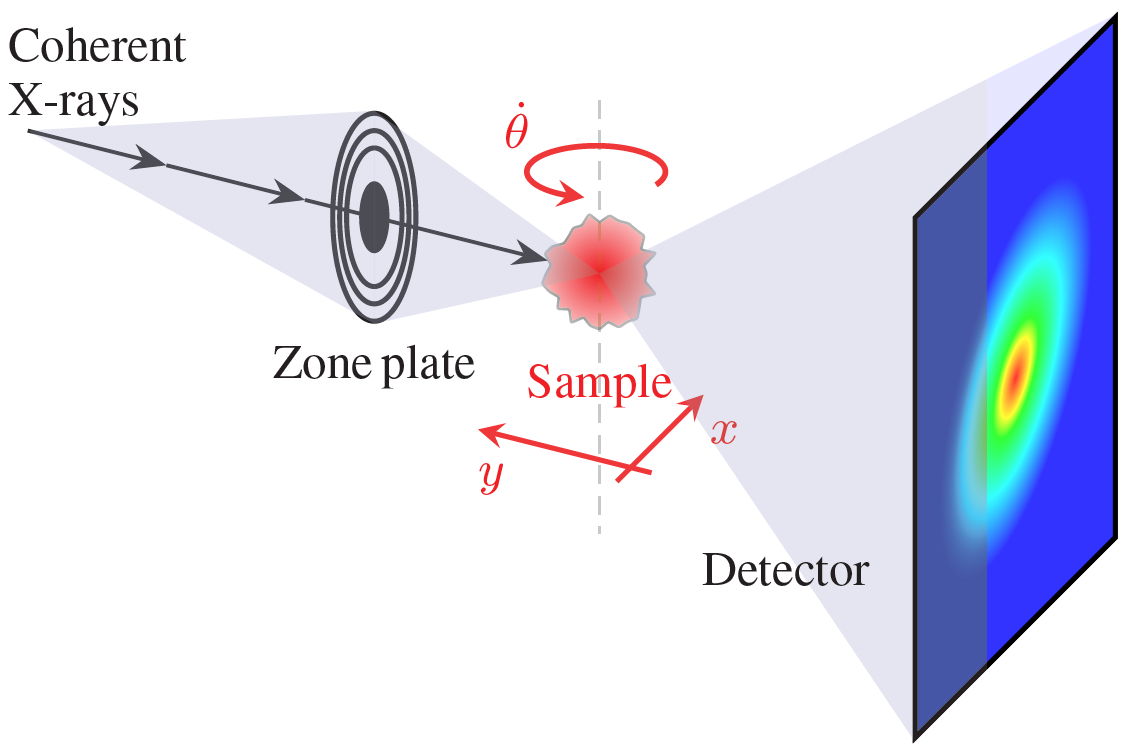
This work reports the current state of the development of a pixelated readout for nanometer resolution X-ray ptychography applications. A very dense, low-noise and low-power pixel developed in a commercial 65nm CMOS technology is envisioned for such applications, targeting a pixel area of 150 μm \texttimes 150 μm, an overall noise of 200e- rms and a power consumption of 150μW per pixel. In the paper, an introduction to the application and an overview of the experimental setup are given, the designed frontend channel is reported and revised in its components and simulation results of the schematic-level design are shown and discussed.
-
 A Low-Noise Readout Channel for X-Ray Ptychography ApplicationsP. Lazzaroni, M. Hammer, M. Manghisoni, and 4 more authorsIn 2022 IEEE Nuclear Science Symposium and Medical Imaging Conference (NSS/MIC), Nov 2022
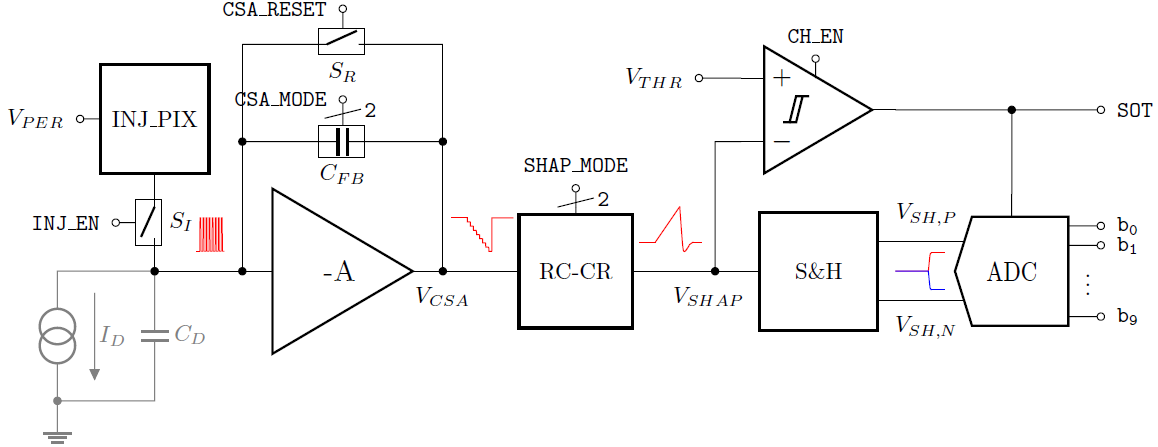
In the present work, the design of a readout channel for a pixelated detector to be employed in X-ray ptychography is proposed and discussed. The channel is developed in a commercial 65 nm CMOS technology, features single photon detection at 5 keV, 9 keV, and 25 keV photons, with a noise of 250 e- rms, a power consumption of 220 \textmu W, and fits in an area of 150 \textmu m \texttimes 150 \textmu m. The readout channel is the elementary cell of an envisioned 128-by-128 pixel matrix and it is designed for operation at a 1 MHz conversion rate. A prototype 8-by-2 matrix, included in the pFREYA16 ASIC, was submitted to foundry to prove the feasibility of such detector. Preliminary noise evaluations, design considerations and post-layout simulation of a single pixel will be presented in this paper.